Styling Tips for Different Body Types: How to Dress to Flatter Your Figure
Fashion works best when it works for you. Whether you're getting dressed for a workday or a weekend out, understanding how silhouette, proportion, and fit interact with your shape can make the difference between an outfit that feels forced and one that feels effortless. These tips aren't about following rules — they're about giving you a starting point to build a wardrobe you genuinely love.
Understanding Body Types — and Why It's Not About Rules
Body type categories are helpful shorthand, not a strict system. The five most commonly referenced shapes — pear, apple, hourglass, rectangle, and inverted triangle — describe general proportions, not a hierarchy. Your body doesn't fit neatly into a box, and that's completely normal.
Most women share characteristics from two or more categories. The goal of using body type as a styling tool is simply to understand proportion: where your silhouette is wider or narrower, where you carry weight, and how clothing lines interact with those features.
Think of it less like a dress code and more like a map. A map doesn't tell you where to go — it just helps you get there faster. The same logic applies here. Once you understand your proportions, you can make more intentional choices rather than guessing in the fitting room.
Styling Tips for the Pear Body Type
Pear-shaped figures have narrower shoulders and a smaller bust relative to wider hips and thighs. The most effective styling approach focuses on drawing attention upward and balancing the upper and lower halves.
A-line skirts and dresses are a natural fit for this shape — they skim over the hips without clinging, creating a smooth, flowing line from the waist down. Wide-leg trousers work similarly, adding visual width at the hem that balances the hip area rather than emphasizing it.
On top, look for:
- Boat necks and off-the-shoulder styles that broaden the shoulder line
- Statement tops with embellishment, prints, or interesting textures
- Structured blazers with defined shoulders
- Bright colors or bold patterns concentrated on the upper body
High-waisted bottoms are worth having in your wardrobe regardless of top style — they define the waist and create a clean vertical line. Pair them with a tucked-in blouse or a cropped top to maximize the effect.
Styling Tips for the Apple Body Type
Apple-shaped figures typically carry more volume through the midsection, with slimmer legs and hips. The most flattering approach creates the impression of a defined waistline and draws the eye vertically.
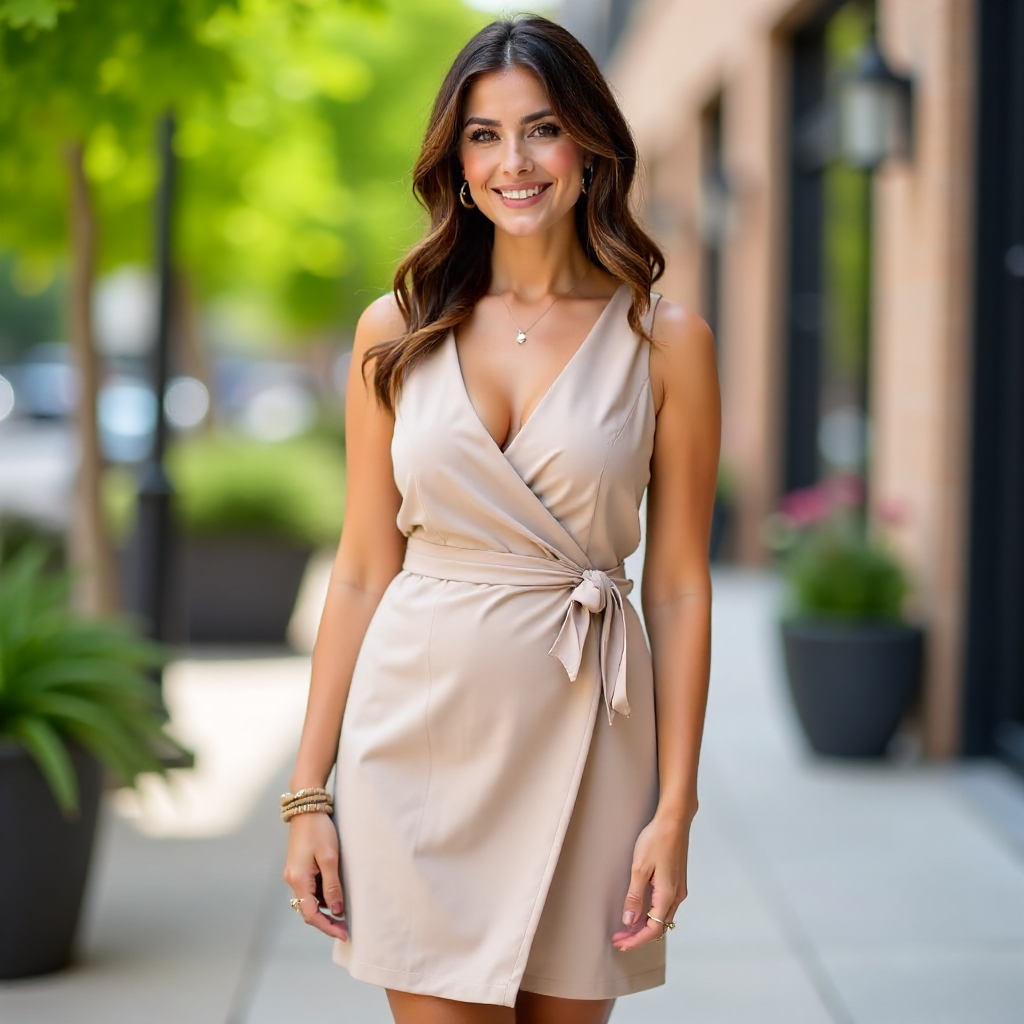
Empire-waist dresses are particularly effective here — the seam sits just below the bust, where the body is naturally narrower, and the fabric flows freely over the midsection. Wrap tops and wrap dresses achieve something similar by creating a diagonal line across the torso that reads as both structured and elongating.
V-necklines are one of the most reliable tools for this body type. A deep V draws the eye downward and inward, creating a lengthening effect through the upper body. Scoop necks work well too, though they're slightly less dramatic.
A few other practical choices:
- Straight-leg or bootcut trousers rather than tapered styles that emphasize the midsection by contrast
- Monochromatic outfits (one color head to toe) that create an unbroken vertical line
- Flowy tunics worn over slim-fit trousers or leggings
- Avoid overly voluminous tops that add bulk without structure
Styling Tips for the Hourglass Body Type
Hourglass figures have shoulders and hips in roughly equal proportion, with a clearly defined waist. The most effective styling approach celebrates that natural waist definition rather than hiding it under excess fabric.
Wrap dresses were practically designed for this shape. They follow the body's natural curves, tie at the waist, and work across every occasion from brunch to the office. Belted coats and structured blazers with a cinched waist deliver a similar effect in cooler weather.
Fitted silhouettes generally work well — think bodycon midi dresses, pencil skirts paired with tucked blouses, or tailored trousers with a fitted top. The key is proportion: clothes that follow your shape without being so tight they restrict movement.
One thing to watch: very voluminous styles — oversized blazers, extremely boxy tops — can obscure the waist that makes this figure distinctive. That's not a rule against wearing them, just worth knowing when you're choosing intentionally. A belt added over an oversized piece can restore that definition if you want it.
Styling Tips for the Rectangle and Inverted Triangle Body Types
Rectangle and inverted triangle figures both benefit from styling that creates the impression of curves and visual contrast between different areas of the body — though they approach it from slightly different starting points.
A rectangle figure has shoulders, waist, and hips in similar widths, with little natural waist definition. The goal is to create the impression of curves through clothing structure. Peplum tops add shape at the hip, ruffled or tiered skirts add volume below the waist, and belted dresses draw in the middle. High-waisted flared trousers or A-line skirts are reliable choices.
An inverted triangle figure has broader shoulders relative to narrower hips. Here, the focus shifts to adding visual volume at the bottom half. Wide-leg trousers, full skirts, and flared denim all work well. On top, avoid styles that add bulk to the shoulder area — cap sleeves, boat necks, and horizontal stripes across the chest will emphasize width you may not want to emphasize.
Layering is a useful tool for both shapes. A long cardigan or duster coat creates vertical lines that break up horizontal width. Strategic layering — heavier pieces on the bottom, lighter on top — can shift visual weight downward for inverted triangle figures.
How Accessories and Fit Can Work for Every Body Type
Proper fit is the single most universally flattering factor in any outfit, regardless of body type. A well-fitted garment in a basic cut will almost always look better than an ill-fitting piece in the "right" style for your shape.
This is where tailoring becomes genuinely valuable. A simple hem adjustment or taking in a waist seam can transform how a garment sits on your body. If you find yourself consistently buying one size for your shoulders and another for your hips, a tailor can bridge that gap for a fraction of the garment's cost.
Belts are one of the most versatile accessories across all body types. A thin belt at the natural waist adds definition to rectangle figures. A wide belt over a wrap dress enhances an hourglass silhouette. Even a simple belt worn over a blazer can shift the entire visual balance of an outfit.
Other accessories worth considering:
- Bags: Clutches and crossbody bags worn at the hip add visual interest at the lower body — useful for inverted triangle figures. Structured totes draw the eye upward.
- Jewelry: Long pendant necklaces create vertical lines that elongate the torso. Statement earrings draw attention to the face and neckline.
- Shoes: Nude or skin-tone shoes visually extend the leg line — a simple trick for creating the illusion of height regardless of body shape.
Building a Wardrobe Around Your Body Type
Shopping intentionally means buying fewer pieces that you actually wear rather than more pieces that sit in the back of your wardrobe. Once you understand your proportions, you can filter your choices faster and invest in pieces that genuinely earn their place.
Start with a small set of versatile key pieces that work consistently for your shape. For pear figures, that might mean two or three A-line skirts in neutral tones and a selection of structured tops. For apple figures, a few wrap dresses in different fabrics covers casual, smart-casual, and semi-formal occasions with minimal effort.
Resist the urge to buy trend pieces before testing them against your own proportions. A silhouette that's everywhere this season may or may not work for your shape — and that's fine. Trends are optional. A wardrobe that fits well and reflects your personal style is not.
Finally, treat body type guidelines as a starting point, not a ceiling. If you love a style that isn't "recommended" for your shape, wear it. Confidence is the most consistent factor in whether an outfit works, and no styling tip can substitute for that.
Frequently Asked Questions
What is the best way to determine my body type?
The simplest method is to compare your shoulder width, waist width, and hip width — either by measuring or by looking at photos taken from the front. If your hips are noticeably wider than your shoulders, you're likely pear-shaped. If your shoulders and hips are similar and your waist is clearly narrower, that's hourglass. Most women fall somewhere between categories, which is completely normal.
Can I wear styles that are not "recommended" for my body type?
Absolutely. Body type guidelines are suggestions based on proportion, not rules. If a style makes you feel good, that matters more than whether it's technically "flattering" by some external standard. Wear what you love.
What clothing shapes are universally flattering?
Wrap dresses, well-fitted straight-leg trousers, and V-necklines tend to work across a wide range of body types because they create clean lines and can be adapted with accessories. Monochromatic outfits are also broadly flattering because they create an unbroken vertical line.
How do I dress to look taller or create the illusion of longer legs?
High-waisted bottoms raise the visual waistline and make legs appear longer. Wearing one color from waist to toe — especially in trousers and shoes — extends the leg line. Vertical stripes, pointed-toe shoes, and avoiding wide horizontal breaks at the ankle all contribute to a taller appearance.
Do styling rules for body types apply to plus-size women?
Yes — the same principles of proportion and silhouette apply across all sizes. The focus on fit and tailoring is especially relevant, since ready-to-wear sizing often doesn't account for the full range of proportions. Many plus-size-specific brands now offer styles specifically cut to address this, making it easier to find pieces that fit well without extensive alterations.